
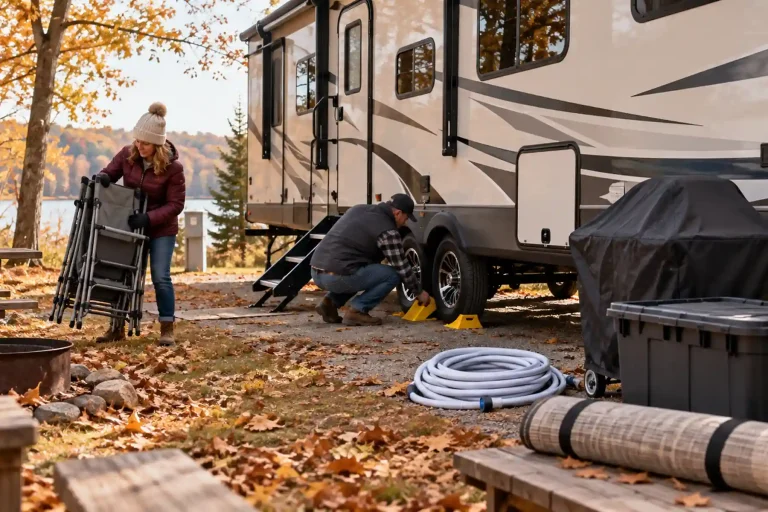
An end of season RV storage checklist is essential for campers preparing to close their campsites before winter arrives. After months of weekend getaways, lakeside activities, family gatherings, and outdoor adventures, October is the time to begin organizing your equipment and preparing your RV for several months of inactivity.
In Nebraska, the transition from fall to winter can bring freezing temperatures, snow, ice, and strong winds. Leaving your camper or campsite unprepared may result in damaged equipment, plumbing problems, moisture buildup, or an unpleasant surprise when camping season returns.
For seasonal RV owners, closing the campsite involves more than simply locking the door and heading home. Outdoor furniture needs to be stored, wastewater tanks should be emptied, electrical equipment must be managed safely, and the RV should be properly winterized.
At Merritt Beach RV Park in Plattsmouth, Nebraska, the regular camping season runs from April 1 through October 31. Eligible seasonal guests can leave their RV onsite during the November 1 through March 31 offseason when the required lease and deposit arrangements are in place.
Whether you’re storing your RV at a campground, commercial storage facility, or home, this checklist will help you close your campsite, protect your belongings, and prepare for a smoother return in spring.
Why an End of Season RV Storage Checklist Is Important
Preparing your RV for winter storage is one of the most important maintenance tasks of the year.
Even when a recreational vehicle remains parked throughout winter, its systems and materials can still be affected by temperature changes, moisture, pests, and prolonged inactivity.
Following a structured closing checklist helps ensure that important tasks are not overlooked during the final camping weekend.
Protect Your RV and Personal Belongings
Recreational vehicles contain valuable equipment, appliances, furniture, and personal belongings.
During winter, exposed materials may experience freezing conditions, snow accumulation, and temperature fluctuations.
Outdoor furniture, camping accessories, electrical cords, and other items may become damaged if they are left unsecured.
Moisture can also enter through worn roof seals, windows, or exterior compartments.
Inspecting the RV and removing vulnerable belongings before storage helps reduce preventable damage.
For seasonal campers who leave their RV at the same campground, proper preparation is especially important because the vehicle may remain unattended for an extended period.
Avoid Leaving Unfinished Maintenance Tasks
The final camping weekend provides an opportunity to identify maintenance issues before the RV is stored.
Small problems such as damaged weather seals, loose exterior components, or minor water leaks can become more serious if left unresolved.
Cold weather may also affect batteries, plumbing, and other systems that require specific storage procedures.
Completing a maintenance inspection before winter helps reduce the likelihood of finding unexpected problems in spring.
Make a list of repairs and address important safety or weatherproofing issues before leaving.
Make Spring Campground Setup Easier
A well-organized campsite is easier to reopen when the next camping season begins.
Removing unnecessary equipment, recording maintenance needs, and storing supplies properly can save time during spring preparation.
Instead of arriving to discover damaged furniture, missing equipment, or unfinished repairs, you can focus on preparing your RV for another season of camping.
This can be particularly valuable for seasonal RV owners who return to the same campground year after year.
Step 1: Clean and Organize Your Campsite
Closing a seasonal campsite begins with removing outdoor belongings and leaving the surrounding area clean.
During the camping season, it’s easy to accumulate additional furniture, recreation equipment, and decorative items.
Before winter storage, decide which belongings should be taken home, placed in approved storage, or disposed of.
Remove Outdoor Furniture and Decorations
Begin by gathering outdoor items around your campsite.
These may include:
- Camping chairs and folding tables
- Outdoor rugs and mats
- Patio decorations and lighting
- Umbrellas and portable shade equipment
- Recreational toys and games
- Fishing equipment
- Bicycles and scooters
- Portable storage containers
Items exposed to Nebraska’s winter weather may deteriorate or become damaged by snow, ice, and strong winds.
Clean and dry outdoor furniture before placing it into storage.
If you plan to leave any equipment at the campground, confirm that the park permits it during the offseason.
At Merritt Beach RV Park, seasonal campers should review the campground’s rules regarding campsite organization, outdoor equipment, and approved site arrangements.
Secure Grills, Storage Containers, and Equipment
Grills and outdoor cooking equipment require additional attention before winter storage.
Clean cooking surfaces, remove grease buildup, and dispose of food residue.
Follow the manufacturer’s storage instructions for propane grills and related equipment.
Propane cylinders should be stored in accordance with applicable safety requirements, never inside enclosed RV living or storage compartments.
Inspect storage containers for moisture before closing them.
Avoid leaving lightweight equipment outside where strong winds could move it across the campsite.
If your RV has an awning, retract it completely and confirm that it is secured according to the manufacturer’s instructions.
Dispose of Trash and Perishable Food
Before leaving the campground, remove all trash and food waste.
Discard perishable items from outdoor coolers, storage containers, and campsite refrigerators.
Clean picnic tables, cooking equipment, and other areas where food was prepared.
Leftover food and waste can attract rodents, insects, and wildlife.
This becomes particularly problematic when an RV remains unused for several months.
Dispose of waste in designated campground receptacles and leave the campsite clean for the offseason.
Step 2: Inspect Your RV Before Storage
Once the campsite is organized, inspect the exterior of your RV.
A visual inspection helps identify existing damage and areas that may become vulnerable during winter.
Check the Roof, Windows, and Exterior Seals
Start by inspecting accessible exterior surfaces.
Pay particular attention to:
- Roof seams and sealant joints
- Windows and door frames
- Skylights and roof vents
- Slide-out seals
- Exterior storage compartments
- Air conditioning mounting areas
- Utility connection openings
Look for cracked sealant, loose components, water stains, and damaged weatherstripping.
If you discover problems, arrange repairs before winter whenever possible.
Do not climb onto the RV roof unless the manufacturer permits roof access and conditions are safe.
For repairs involving difficult-to-reach areas, consider using a qualified RV technician.
Inspect Tires and Exterior Components
Tires can be affected by prolonged storage, especially when the RV remains parked for several months.
Before storage, inspect tire condition and pressure according to the manufacturer’s recommendations.
Look for cracks, cuts, unusual wear, and signs of damage.
Verify that the RV is supported and stabilized correctly.
Wheel chocks and leveling equipment should be used according to the vehicle manufacturer’s instructions.
Do not rely on stabilizer jacks to perform tasks they were not designed to handle.
Inspect exterior lighting, steps, compartment doors, and other components for damage.
If repairs are needed, document them before leaving.
Identify Repairs Needed Before Winter
Not every maintenance task can be completed during the final camping weekend.
Create a written list of repairs that need attention.
These might include replacing damaged seals, servicing appliances, repairing exterior fixtures, or checking a malfunctioning heating system.
Prioritize issues that could allow water intrusion or create safety concerns during storage.
Take photographs of damaged areas so you can provide accurate information to a service technician.
Keeping maintenance records also makes spring preparation easier.
Step 3: Manage Water and Wastewater Systems
Water and wastewater systems require particular attention before winter.
When water freezes inside plumbing components, it expands and may cause cracks, leaks, or other damage.
Proper winterization should follow your RV manufacturer’s instructions.
Arrange a Final Holding-Tank Pump-Out
Before placing your RV into storage, empty the black and gray wastewater holding tanks.
Leaving wastewater inside tanks for several months can contribute to odors, residue buildup, and potential freezing damage.
Merritt Beach RV Park provides water and electrical hookups at its campsites, but individual sites do not have sewer hookups.
Guests may arrange wastewater pump-out services through local providers.
For seasonal campers preparing for winter, scheduling the final pump-out before leaving is an important part of campsite closing.
Confirm service availability and any applicable charges in advance.
After the tanks are emptied, complete the remaining wastewater-system winterization steps according to your RV manufacturer’s instructions.
Disconnect and Store Freshwater Hoses
Freshwater hoses should be disconnected before freezing weather arrives.
Drain remaining water and allow hoses to dry before placing them in storage.
Inspect hoses for cracks, damaged fittings, or signs of excessive wear.
Coil them carefully to avoid kinks and store them in a clean, dry location.
Remove portable filters or other water accessories that may be damaged by freezing temperatures.
If the campground has specific procedures for disconnecting water service, follow those instructions.
Complete Manufacturer-Recommended Winterization
Draining exterior hoses is not enough to protect an RV’s plumbing system.
Water may remain inside supply lines, faucets, water heaters, pumps, and other components.
Complete the winterization procedure specified for your RV model.
Depending on the system, this may involve draining plumbing, bypassing certain appliances, and using approved non-toxic RV antifreeze.
Never use automotive antifreeze in an RV drinking-water system.
The exact procedure depends on your RV’s design and installed equipment.
For detailed instructions, read How to Prepare Your RV for Winter Storage in Nebraska.
That guide covers important winterization considerations for campers facing Nebraska’s freezing winter conditions.
Step 4: Secure the RV Interior
Once exterior equipment and utility connections are addressed, prepare the inside of your RV.
The goal is to leave a clean, dry, and organized living space that can remain unused until the next camping season.
Remove Food and Attractants
Empty the refrigerator, freezer, pantry, and other food storage areas.
Remove perishable food, opened packages, and products that may attract insects or rodents.
Clean shelves, cabinets, drawers, and food preparation surfaces.
If the refrigerator will remain turned off, follow manufacturer instructions for cleaning and leaving the doors appropriately positioned to prevent trapped odors and moisture.
Take home medication, valuables, important documents, and items sensitive to freezing temperatures.
Before leaving, inspect storage compartments for forgotten food or trash.
Protect Fabrics and Storage Compartments
Bedding, towels, curtains, and upholstered furniture can absorb moisture during long periods of storage.
Remove items that could be affected by temperature changes or damp conditions.
Clean and dry remaining fabrics before closing the RV.
Avoid storing wet clothing, towels, or recreational equipment inside.
Inspect cabinets, under-bed storage, and other enclosed spaces for signs of moisture.
Keeping the interior clean and dry helps reduce the risk of odors, mildew, and pest activity.
Address Moisture and Pest Risks
Moisture and pests are common concerns for stored recreational vehicles.
Inspect the RV for openings around plumbing penetrations, wiring, vents, and storage compartments.
Use manufacturer-approved materials to seal unwanted gaps without blocking required ventilation.
Avoid leaving food, pet supplies, or scented items that could attract animals.
Address any existing leaks before storage.
If using moisture-control products, follow their instructions and ensure they are suitable for unattended use inside an RV.
Never block required appliance vents or safety openings.
Step 5: Check Batteries and Electrical Equipment
Electrical systems also require attention before extended storage.
Batteries can discharge over time, and damaged electrical equipment may deteriorate further if left unattended.
Follow Battery Storage Recommendations
RV batteries require different storage procedures depending on their chemistry, equipment configuration, and manufacturer.
Some batteries may need to be disconnected, removed, or maintained with an approved charging system.
Lithium batteries and lead-acid batteries often have different charging and temperature requirements.
Review the manufacturer’s recommendations before deciding how to store your batteries.
Do not assume that every battery should remain connected to a charger throughout winter.
If your RV contains a solar charging system, confirm that its configuration is appropriate for the battery type and storage conditions.
Disconnect Electrical Equipment Safely
Before leaving your RV, follow the manufacturer’s shutdown procedure for appliances and electrical systems.
Unplug unnecessary equipment and turn off devices that should not remain energized during storage.
If the campground requires shore power to be disconnected, follow the park’s procedures.
Do not modify the electrical pedestal or leave unauthorized heating equipment operating unattended.
Portable space heaters should not be used as a substitute for proper winterization.
Inspect Cords and Connections
Examine the RV’s shore power cord and electrical connectors for visible damage.
Look for:
- Cracked insulation
- Bent or damaged plug terminals
- Discoloration or overheating
- Loose connector housings
- Moisture intrusion
- Damaged extension equipment
Do not use electrical components that show signs of overheating or physical damage.
Have questionable equipment inspected or replaced by a qualified professional.
Store disconnected cords in a clean, dry location according to manufacturer recommendations.
Step 6: Review Campground Storage Policies
For seasonal RV owners, campground rules are an important part of the winter storage process.
Storage privileges may depend on active leases, deposits, vehicle eligibility, and other conditions.
Understanding these requirements helps avoid misunderstandings when the campground closes for the season.
Confirm Storage Eligibility
Merritt Beach RV Park’s regular camping season runs from April 1 through October 31.
The park offers offseason RV storage from November 1 through March 31 for eligible guests with qualifying seasonal arrangements.
According to the park’s published policies, a signed lease and deposit for the following season must be in place by August 31 to secure storage eligibility.
If you’re approaching the end of October and have not completed these arrangements, contact management directly to discuss your options.
Do not assume that an overnight, weekly, or month-to-month reservation automatically includes winter storage.
Check Access and Insurance Requirements
Before leaving your RV onsite, clarify whether access is permitted during the offseason.
Some campgrounds limit guest entry or have special procedures when the regular camping season is closed.
Ask whether you can visit the RV for inspections, retrieve belongings, or perform maintenance.
Also review your RV insurance coverage.
Confirm that the policy addresses the vehicle’s storage location and relevant risks, including weather damage and theft, subject to policy terms.
Keep copies of important documents and campground agreements in a safe location.
Understand Site and Equipment Restrictions
Seasonal campgrounds may have rules about which belongings can remain outside an RV during offseason storage.
These may include restrictions on outdoor furniture, decorations, storage containers, recreational equipment, and other campsite accessories.
Merritt Beach RV Park requires seasonal guests to maintain their campsites according to park rules.
Before departing, ask management whether any equipment must be removed or secured differently for winter.
Do not assume that a permitted summer campsite setup can remain unchanged throughout the offseason.
Create a Spring Reopening Checklist
Closing the campsite properly in October makes the next camping season easier to manage.
Before leaving, prepare a simple reopening plan so you know what needs attention when spring arrives.
Record Maintenance and Repairs
Keep a record of any repairs or maintenance completed before storage.
Note equipment that needs further service.
Your spring list might include:
- Inspecting exterior seals and the roof
- Checking tires and pressure
- Reconnecting and testing batteries
- De-winterizing the plumbing system
- Sanitizing the freshwater system
- Testing electrical equipment
- Checking propane appliances
- Inspecting for moisture or pest damage
Follow manufacturer instructions and arrange professional inspections where necessary.
A written checklist helps ensure that important systems are checked before the RV returns to regular use.
Organize Equipment for Spring
Before leaving your campsite, sort belongings according to when they will be needed again.
Store seasonal decorations, recreational equipment, and camping supplies in labeled containers.
Create an inventory of items taken home and those left in approved storage.
If possible, keep an electronic copy of the inventory with photographs.
This can reduce unnecessary packing and replacement purchases when camping season begins.
Prepare for the April Camping Season
Merritt Beach RV Park’s regular camping season begins April 1.
For returning seasonal guests, spring provides an opportunity to reconnect with familiar surroundings and prepare for another season of lakeside camping.
Plan enough time to inspect your RV and restore its systems safely before using them.
Confirm campground access arrangements and any procedures for reconnecting utilities.
If your RV remained onsite over winter, follow the campground’s instructions for returning to your site.
Early preparation can make the first camping weekend more enjoyable.
End Your Camping Season at Merritt Beach RV Park
An organized seasonal RV closing checklist helps campers protect their vehicles and simplify the transition between camping seasons.
At Merritt Beach RV Park in Plattsmouth, Nebraska, seasonal guests enjoy a camping destination with access to a swimming lake, fishing lake, and other outdoor recreation opportunities.
The campground operates from April 1 through October 31 and offers water and 30/50-amp electrical hookups at its RV sites.
Individual sewer hookups are not available, but guests can arrange separate wastewater pump-out services through local providers.
For qualifying seasonal guests, onsite offseason storage is available from November 1 through March 31, subject to applicable lease and deposit requirements.
This arrangement can reduce the need to tow a camper to another storage location and return it before the next camping season.
However, leaving an RV onsite does not eliminate the need for proper winterization or compliance with campground rules.
Whether you’re storing a travel trailer, fifth wheel, or motorhome, completing a careful end-of-season inspection and campsite cleanup is an important part of protecting your investment.
Close the Season With Confidence and Prepare for Spring
The final camping weekend of October is an opportunity to prepare for the months ahead.
Cleaning your campsite, securing outdoor equipment, emptying wastewater tanks, inspecting your RV, and completing proper winterization can help reduce potential damage during storage.
Equally important is confirming storage policies, reviewing insurance requirements, and creating a plan for spring reopening.
With a clear checklist, RV owners can leave their campsites more confidently and return when warmer weather arrives with fewer unfinished tasks.
For campers who enjoy returning to the same destination each year, seasonal RV sites with qualifying offseason storage arrangements can make the transition between seasons more convenient.
Planning to return to Merritt Beach RV Park next camping season?
Explore Merritt Beach RV Park’s seasonal RV sites and contact the campground to confirm site availability, lease requirements, and winter storage eligibility.
You can also review RV Winter Storage Near Omaha: Why Keeping Your Camper at a Seasonal RV Park Makes Sense for more information about onsite seasonal storage.
Finish the Season Prepared and Look Forward to Another Year at Merritt Beach RV Park!