
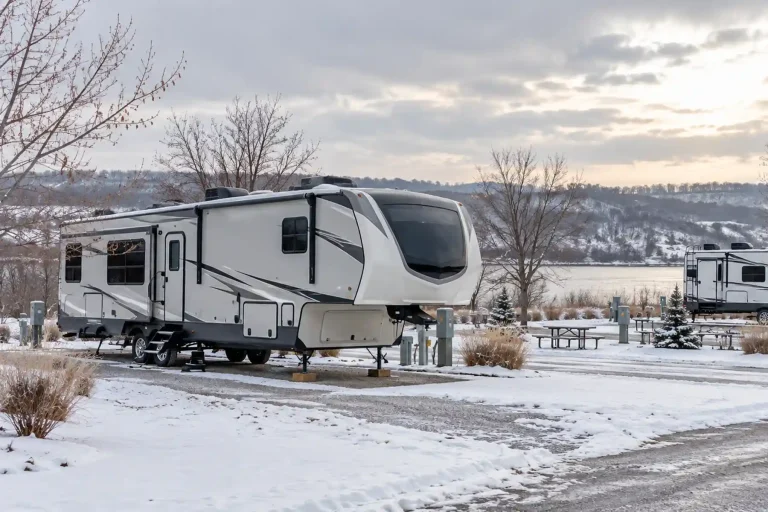
Finding reliable RV winter storage near Omaha is an important consideration for camper owners preparing for Nebraska’s colder months. As the camping season ends, RV owners must decide where to keep their travel trailers, fifth wheels, and motorhomes until warmer weather returns.
Nebraska winters can bring freezing temperatures, snowfall, strong winds, and icy conditions. Leaving an RV improperly stored during these months can increase the risk of weather-related damage, maintenance problems, and unexpected expenses.
Many RV owners choose traditional storage facilities or keep their campers at home. However, for people who spend much of the camping season at the same campground, onsite winter storage may offer a more convenient alternative.
Instead of towing the RV to a separate storage location after the final camping weekend, eligible seasonal campers may be able to leave their vehicle at the campground throughout the offseason.
At Merritt Beach RV Park in Plattsmouth, Nebraska, qualifying seasonal guests can store their RV onsite from November 1 through March 31, subject to seasonal lease and deposit requirements.
This guide explores different winter RV storage options around Omaha, the advantages of keeping a camper at a seasonal campground, and what owners should consider before storing their recreational vehicles for the winter.
Why RV Winter Storage Matters in Nebraska
Winter storage involves more than finding an available parking space.
Recreational vehicles contain plumbing, electrical components, appliances, batteries, and exterior materials that can be affected by prolonged exposure to cold weather.
Choosing an appropriate storage arrangement and preparing the RV correctly can help protect these systems until the next camping season.
How Freezing Temperatures Affect Stored RVs
Freezing temperatures are one of the biggest concerns for RV owners in Nebraska.
Water remaining inside freshwater lines, holding tanks, faucets, and other plumbing components can freeze and expand.
When enough water freezes inside a confined component, it can cause cracks, leaks, or damage that may not become obvious until spring.
Cold weather can also affect batteries, seals, and other equipment.
Even an RV that remains parked for several months requires appropriate preparation.
Before placing a camper into winter storage, owners should follow the winterization procedures recommended by their RV manufacturer.
This may involve draining water systems, protecting plumbing with approved RV antifreeze, managing batteries, and inspecting exterior seals.
Proper winterization is essential regardless of whether the camper is stored indoors, outdoors, at home, or at a seasonal campground.
Protecting Your Camper During Snow and Ice
Snow, ice, and winter precipitation can create additional challenges for stored recreational vehicles.
Accumulated snow adds weight to an RV roof, while melting snow and freezing temperatures can expose weaknesses in exterior seals.
Strong winds can also affect loose exterior equipment, covers, and improperly secured accessories.
Before storage, inspect the RV’s roof, windows, doors, vents, and slide-out seals.
Look for cracks, worn materials, or areas where moisture could enter.
Make necessary repairs before winter whenever possible.
RV owners should also retract awnings, secure exterior compartments, and remove loose items from the surrounding campsite.
Using an RV cover may provide some protection, but it should be appropriate for the vehicle and installed according to manufacturer recommendations.
A poorly fitted cover can rub against exterior surfaces during windy conditions and potentially create damage.
Planning Ahead Before the Camping Season Ends
Waiting until the first hard freeze to arrange winter storage can create unnecessary complications.
Storage facilities may have limited availability, and moving a large RV requires additional planning.
The best approach is to begin researching storage arrangements before the final weeks of camping season.
Consider where the RV will remain, how it will be winterized, whether you will need access during storage, and when it can be retrieved.
For seasonal campers, reviewing campground lease and storage policies early is especially important.
At Merritt Beach RV Park, the regular camping season runs from April 1 through October 31.
Eligible seasonal campers may leave their RV onsite during the November 1 through March 31 offseason, provided the required arrangements for the following season are in place.
Because lease and deposit deadlines apply, storage eligibility should be confirmed well before the season ends.
RV Winter Storage Near Omaha: Comparing Your Options
RV owners around Omaha and eastern Nebraska have several storage arrangements to consider.
Each offers advantages depending on RV size, budget, accessibility requirements, and the level of protection desired.
Indoor RV Storage Facilities
Indoor RV storage provides an enclosed location where campers are protected from direct snowfall, hail, and other outdoor weather exposure.
This arrangement may be appealing to owners with larger investments or those who prefer keeping their RV away from the elements.
However, indoor storage typically requires access to a facility with sufficient clearance and space for recreational vehicles.
Large fifth wheels and motorhomes may have limited options because of their dimensions.
Indoor facilities may also charge higher rates than outdoor parking arrangements.
Before reserving, confirm the facility’s height restrictions, security arrangements, access hours, and storage terms.
Indoor storage does not eliminate the need for winterization, especially when the building is unheated or subject to freezing temperatures.
Outdoor RV Storage Lots
Outdoor storage facilities provide designated parking areas for travel trailers, motorhomes, and other recreational vehicles.
These facilities may offer open parking spaces, gravel surfaces, gated access, or additional security features.
Outdoor storage can be a practical option for owners who cannot keep an RV at home.
However, the camper remains exposed to seasonal weather.
Owners must properly winterize their RV, inspect its exterior condition, and follow facility requirements.
Access restrictions and storage costs also vary.
Before selecting a facility, ask about parking surfaces, vehicle spacing, security policies, and whether the RV can be accessed during the winter.
Storing Your RV at Home
Some RV owners prefer keeping their campers in a driveway, garage, or another suitable area on their property.
Home storage provides convenient access for inspections, maintenance, and spring preparation.
It may also reduce the need to pay for separate commercial storage.
However, storing an RV at home is not always practical.
Local ordinances, homeowners association rules, available parking space, and neighborhood restrictions may limit where recreational vehicles can be kept.
Large trailers can also occupy considerable driveway space.
If storing your RV at home, confirm that the location is permitted and that the parking area provides suitable support for the vehicle.
Onsite Storage at a Seasonal RV Park
For campers who return to the same campground year after year, onsite RV winter storage can offer a particularly convenient arrangement.
Some seasonal RV parks allow eligible guests to leave their RV at the campground during the offseason.
Instead of transporting the camper to a separate facility in the fall and returning it in spring, the RV can remain in place under the campground’s storage conditions.
This arrangement may appeal to owners of large fifth wheels, destination trailers, and other recreational vehicles that require additional preparation for towing.
However, onsite storage is not automatically available at every RV park.
Campers should verify lease requirements, offseason access policies, storage charges, and responsibilities before making plans.
Benefits of Keeping Your RV at a Seasonal Campground
For RV owners who regularly return to the same destination, seasonal camping can simplify much of the work involved in planning weekend getaways.
When offseason storage is also available, the benefits may extend beyond the regular camping season.
Avoid Repeated Towing and Transportation
Transporting a large RV requires preparation.
Before towing, owners may need to retract slide-outs, disconnect utilities, secure outdoor equipment, inspect tires, check lighting, and prepare the trailer or motorhome for travel.
After reaching a storage facility, the vehicle must be positioned and secured again.
The same process is repeated when camping season returns.
For seasonal campers with qualifying onsite storage, these additional transportation steps may be avoided.
Keeping the RV at the same campground eliminates the need to move it to a separate storage facility and bring it back solely because the camping season has ended.
This can be particularly convenient for owners of larger recreational vehicles.
Return to a Familiar Campsite in Spring
One of the advantages of seasonal RV camping is returning to a familiar location throughout the camping season.
Guests become accustomed to their campsite, nearby amenities, and the surrounding campground environment.
When an eligible RV remains onsite during winter, the transition into spring may be easier.
Rather than arranging transportation from a separate storage facility, owners can focus on inspecting their RV and preparing it for use.
At Merritt Beach RV Park, the regular camping season begins April 1.
For returning seasonal guests, this provides a natural opportunity to prepare for another season of lakeside camping.
Reopening still requires proper inspections, de-winterization, and compliance with campground policies.
Simplify Seasonal Camping Preparations
Preparing for a new camping season often involves several tasks.
These may include testing electrical systems, flushing winterized plumbing, inspecting tires, checking batteries, and restoring supplies.
When the RV remains at the seasonal campground, owners may have fewer transportation arrangements to coordinate.
They can concentrate on preparing the RV for another season of use rather than scheduling a separate towing trip.
For families who frequently spend weekends camping, reducing transportation and setup work can create more time for recreation.
Seasonal RV camping also makes it easier to return to a familiar destination throughout spring, summer, and fall.
Reduce the Need for Separate Storage Arrangements
RV owners who use commercial winter storage may need to manage two separate arrangements.
One is the campground reservation during the warmer months, while the other is the storage agreement during winter.
This can involve separate payments, contracts, transportation arrangements, and access policies.
Qualifying onsite storage can simplify those logistics by allowing the RV to remain at the campground.
However, the financial advantage depends on the seasonal lease, any applicable storage charges, and the owner’s alternatives.
Always compare the complete cost and conditions before deciding.
What to Consider Before Choosing Winter RV Storage
The most suitable storage option is not necessarily the closest or least expensive facility.
RV owners should evaluate policies, accessibility, maintenance responsibilities, and insurance requirements before committing to a winter arrangement.
Storage Eligibility and Lease Requirements
Seasonal campground storage often operates differently from conventional commercial RV storage.
Some campgrounds reserve offseason storage for guests who have signed a seasonal agreement for the following year.
Others may require deposits or have renewal deadlines.
Before making arrangements, confirm whether your RV qualifies for onsite storage and whether specific paperwork must be completed.
Review any requirements related to vehicle condition, campsite cleanliness, and payment deadlines.
Do not assume that having a monthly reservation automatically includes winter storage privileges.
Accessibility During the Offseason
Access to a stored RV can vary significantly between facilities.
Some commercial storage businesses offer scheduled access, while others may provide more flexible entry arrangements.
Seasonal campgrounds may have different rules after the regular camping season closes.
Before choosing onsite storage, ask whether you can visit the RV, perform maintenance, or remove belongings during the winter.
You should also understand whether moving or retrieving the vehicle requires advance approval.
At Merritt Beach RV Park, the camping season ends October 31, so guests should confirm offseason access arrangements directly with management.
Storage eligibility should not be interpreted as permission to occupy the RV during the offseason.
Winterization Responsibilities
Keeping an RV at a campground does not eliminate the owner’s responsibility to prepare it for freezing weather.
Even when a camper remains parked at the same site, its plumbing and mechanical systems can experience winter-related damage.
Before storage, owners should review their RV manufacturer’s instructions and complete appropriate winterization procedures.
Common considerations include draining water systems, preparing holding tanks, checking batteries, securing exterior equipment, and removing food.
At Merritt Beach RV Park, individual campsites do not have sewer hookups.
Guests who need their wastewater tanks emptied may arrange pump-out services with local providers before winter storage.
For a detailed preparation guide, read How to Prepare Your RV for Winter Storage in Nebraska.
Insurance and Storage Restrictions
RV insurance policies may contain specific provisions for vehicles stored during the offseason.
Before leaving your camper for several months, review your coverage and ask your insurance provider about any requirements.
Important considerations may include weather damage, theft, vandalism, liability, and storage location restrictions.
Campground policies may also prohibit certain equipment, unattended outdoor belongings, or unauthorized site modifications.
Understanding both insurance and campground requirements can help avoid complications if an unexpected problem occurs.
Understanding Offseason RV Storage at Merritt Beach RV Park
Located in Plattsmouth, Nebraska, Merritt Beach RV Park offers seasonal RV sites for guests who want to enjoy repeated visits throughout the camping season.
The campground features a swimming lake, stocked fishing lake, and recreational amenities designed for seasonal campers and families.
For qualifying seasonal guests, the park also provides an onsite winter storage option.
November 1 Through March 31 Storage Period
Merritt Beach RV Park’s regular camping season operates from April 1 through October 31.
Eligible seasonal campers may leave their RV stored onsite during the offseason from November 1 through March 31.
This arrangement allows qualifying guests to avoid transporting their RV to a separate winter storage location.
When spring arrives, returning campers can prepare their RV for the next operating season.
However, offseason storage should not be confused with year-round camping.
The regular camping season remains April through October, and storage privileges are subject to campground requirements.
Seasonal Lease and Deposit Requirements
Winter storage eligibility at Merritt Beach RV Park is connected to seasonal camping arrangements.
The park’s published policies state that qualifying guests must have the required seasonal lease and deposit in place for the following camping season.
The published lease renewal deadline is August 31.
For guests preparing their RVs in October, this means storage arrangements should already have been addressed through the seasonal renewal process.
Campers who have not confirmed their eligibility should contact management rather than assuming onsite storage is available.
Monthly and overnight guests should not assume their reservations include winter storage.
The park can clarify current eligibility, lease conditions, and any applicable charges.
For more information, explore Seasonal RV Sites at Merritt Beach RV Park.
Preparing Your RV Before Leaving It Onsite
Seasonal guests planning to leave their RV at Merritt Beach should complete their storage preparations before departing for the winter.
Start by removing unnecessary outdoor belongings and ensuring the campsite meets park requirements.
Check that exterior storage compartments are secured, inspect the RV for damage, and arrange any required holding-tank pump-out.
Follow the manufacturer’s procedures for winterizing water systems and preparing batteries, appliances, and other equipment.
Remove food, valuables, and temperature-sensitive items that should not remain inside the vehicle.
Take photographs of the RV and campsite after completing preparations.
Finally, confirm any additional requirements with campground management.
Completing these steps can help protect your RV while keeping the campsite organized throughout the offseason.
Plan Your Next Camping Season Before Winter Arrives
Winter storage is also a good time to think about the following camping season.
For RV owners who enjoy returning to the same destination, seasonal camping can provide greater convenience than repeatedly reserving individual weekend stays.
Instead of preparing the RV for travel every Friday, seasonal guests can return to a familiar campground throughout the operating season.
Merritt Beach RV Park provides access to recreational opportunities including swimming, fishing, and other outdoor activities.
Its seasonal accommodations can appeal to families, couples, and RV owners looking for a regular getaway near Omaha and Plattsmouth.
Planning ahead also helps guests understand renewal deadlines, seasonal site availability, and storage eligibility.
If you intend to return for another year, contact the campground early to review your options.
Learn more about the benefits of seasonal camping in Why Seasonal RV Camping Near Omaha Makes Weekend Trips Easier.
Explore Seasonal RV Camping at Merritt Beach RV Park
Choosing RV winter storage near Omaha involves more than finding a parking space for the colder months.
For RV owners who enjoy seasonal camping, keeping an eligible camper onsite can simplify transportation, reduce repeated setup work, and make returning in spring more convenient.
Merritt Beach RV Park in Plattsmouth provides seasonal camping opportunities with access to a swimming lake, fishing lake, and other recreational amenities.
Seasonal RV sites include water connections and 30/50-amp electrical service. Individual campsites do not have sewer hookups, but local pump-out services may be arranged separately.
Eligible seasonal guests may also leave their RV onsite during the November through March offseason, subject to lease, deposit, and campground requirements.
Whether you’re preparing to store your RV for the winter or planning your next season of camping, understanding your options early can help protect your investment and simplify future trips.
Interested in seasonal RV camping with offseason storage near Omaha?
Explore Merritt Beach RV Park’s seasonal RV sites and contact the campground to confirm availability, storage eligibility, current lease requirements, and pricing.
Make Your Next Camping Season Easier at Merritt Beach RV Park!